

A four-part program created specifically for wine industry owners, managers, and emerging leaders ready to move from uncertainty to meaningful action.
Wine industry leaders are being asked to build sales, control costs, and take on more with less.
The Wine Business Leadership Series is an inspiring, four-part program created specifically for wine industry owners, managers, and emerging leaders ready to move from uncertainty to meaningful action. Through practical education, expert insight, peer accountability, and personalized planning, participants will gain fresh perspective and develop a clear path forward for an important business goal.
Produced in collaboration with the Paso Robles Wine Country Alliance, this four-part series helps owners, managers, and emerging leaders work on their business, not just in it, through practical frameworks, real-world case studies, expert insight, peer discussion, and a personalized workbook.
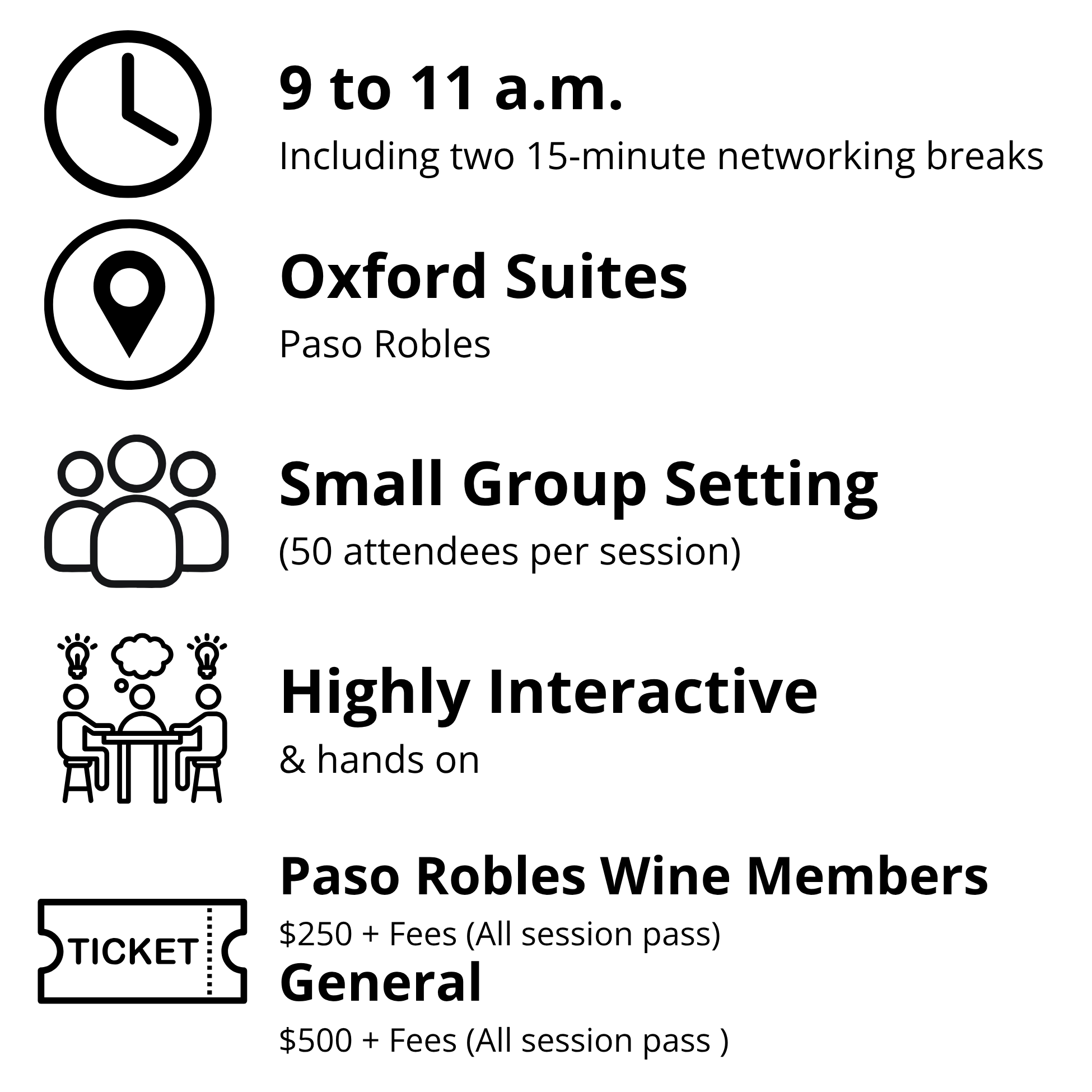
Program Details
Session 1 | February 2, 2027 — Clear Goals, Focused Action
The wine industry is navigating one of its most challenging periods in recent memory. Leaders are being asked to build sales, control costs, and absorb additional responsibilities—all while working with limited time and resources. This session will help participants step back from day-to-day demands, define the goal that matters most and narrow their attention to the actions most likely to move it forward. Using a practical, step-by-step approach, participants will assess their competing priorities, apply the framework to a real-world case involving a producer facing similar pressures, and exchange perspectives in small groups. Each person will leave with a clearly defined goal, a focused action plan, and a practical first step.
Session 2 | March 2, 2027 — Turn Priorities into Team Action
Building on Session 1, this session helps participants turn an important priority into a clear, actionable plan. Using wine industry case studies as a guide, participants will create a priority scorecard that outlines the desired outcome, specific action steps, measures of progress, responsible team members, and target dates. They will also explore how to involve staff, partners, or contractors in shaping the scorecard so expectations are clear and everyone understands how their work contributes to the larger goal. Each participant will leave with a practical first draft they can use to start productive conversations, strengthen teamwork, and move an important business initiative forward.
Session 3 | April 6, 2027 — Candid Conversations in Challenging Times
Difficult business conditions often require sensitive conversations about lending, financial realities, contracts, or employee performance. In this expert panel, professionals from each discipline will draw on wine industry-specific situations to share candid stories and practical guidance for approaching these conversations with care, integrity, and honesty. Using a 3-2-1 format, each panelist will offer three timely pieces of advice, two trusted resources, and one story about a significant wine business challenge that moved toward a constructive outcome. The discussion will also explore how considering more than one acceptable outcome can create new possibilities. Audience questions and guided reflection will help participants identify a difficult conversation of their own and a practical next step.
Featured Guests:
Tim Kensigner, AgWest Farm Credit
Erin Nagle, Glenn Burdette CPA
Audra Cooper, Turrentine Brokerage
Session 4 | May 4, 2027 — Inspect, Recalibrate, Move Forward
Setting expectations is only the beginning. The best leaders and teams consistently inspect what they expect—from themselves and from one another. In this reflective session, participants will objectively assess progress toward their goals, compare expected and actual results, and identify where performance, communication, or accountability needs attention. Drawing on the goals, scorecards, and communication practices developed throughout the series, participants will determine what is working, what needs to change, and whether the goal or strategy should be recalibrated. Each person will leave with a clearer plan of attack and renewed momentum for moving forward.

PRESENTING SPONSORS


